
Google satellite with TPU generated a response directly in orbit for the first time
The Project Suncatcher craft launched the Gemma 4 model onboard and wrote a haiku about space. Next — tests for thermal stress and radiation, then two connected satellites in 2027.
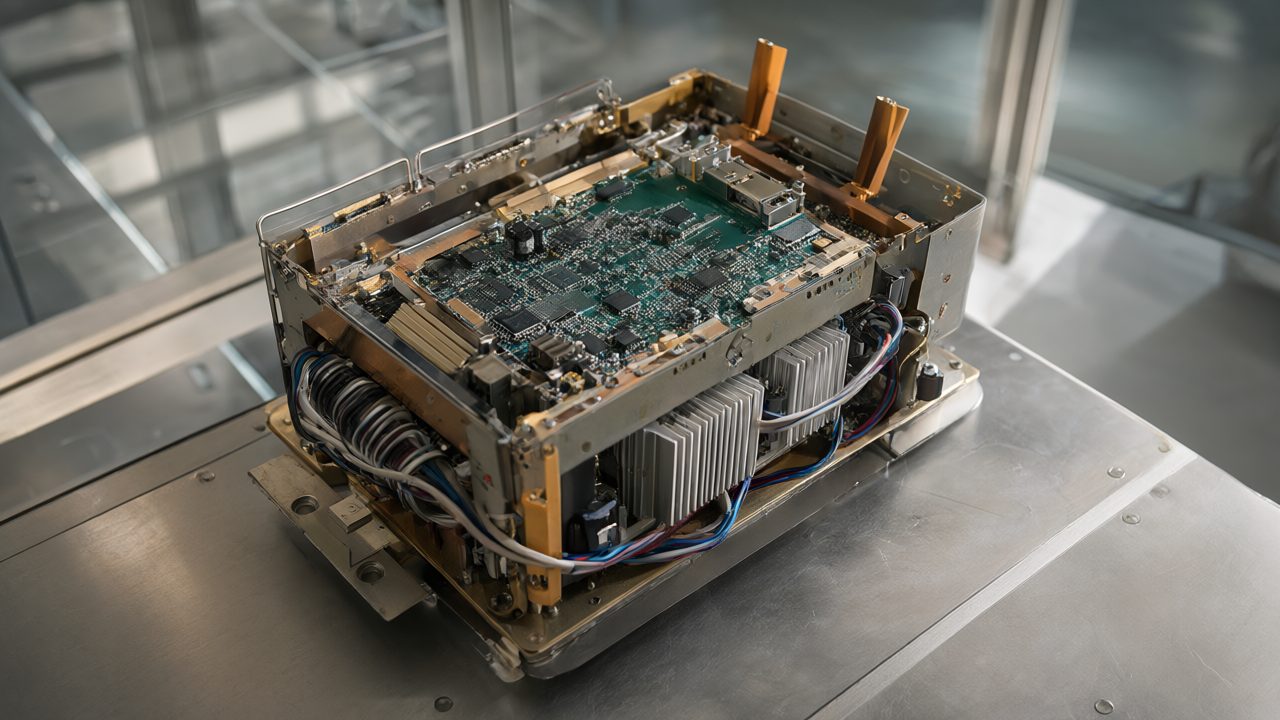
On October 30, 2026, Google announced that its satellite with Tensor Processing Unit (TPU — an accelerator for machine learning tasks) chips generated a response directly in orbit for the first time. The Gemma 4 model started onboard, and on request it wrote a haiku (a short three-line poem) about being in space. The blog gives the first lines — about the “blue marble” below and data streams. The post appeared on Friday. The craft belongs to Project Suncatcher — an experiment in which Google is studying whether AI data centers can be placed in space. The satellite was put into orbit in early October 2026.
The difference from previous steps is where the computation takes place. Usually the model runs on Earth-based hardware, and the satellite transmits raw data down. Here inference (running an already trained model) took place onboard, and finished text went to Earth. Google also ran other prompts: space-themed limericks and telemetry-related requests. The note does not contain data on how many requests were processed and with what latency. Nothing is said there about previous similar launches by Google either.
In practice, this is a test of whether the accelerator withstands orbital conditions. Google writes that next there will be a series of tests: how TPUs behave under thermal stress and radiation. If the chips confirm the ability to stably perform workloads in space, the company will move to the next stage — two interconnected satellites in 2027. The initiative itself is described as experimental: data centers in orbit are mentioned as a possible, not planned, outcome. At the same time, a data center is not only chips: communication channels between craft, heat removal, and power are needed. The note says nothing about these parts. The logic of the idea is that the result of processing goes down, not the entire stream of raw data.
What remains unknown: how much energy the payload consumes, at what speed it exchanges with Earth, and how much it costs. Google does not provide answers to these questions.