
SETI integrated agentic AI into the daily search for extraterrestrial signals
Breakthrough Listen and the SETI Institute have integrated agentic AI into the daily signal search at the Allen Telescope Array: agents control the telescope and process data from a single request.
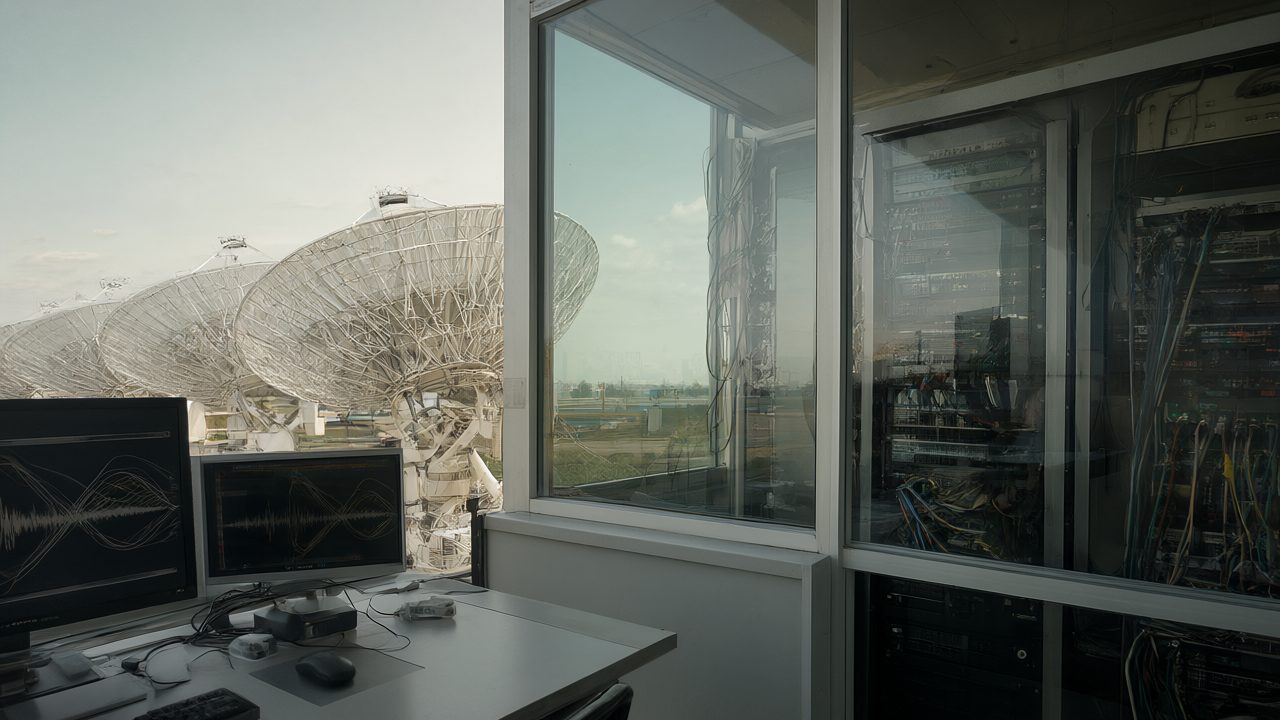
On October 30, 2026, Breakthrough Listen and the SETI Institute reported that agentic AI (systems that independently perform a chain of actions on request) has been included in the daily search for extraterrestrial intelligence. At the Allen Telescope Array in Northern California, agents can control the instrument, improve and correct incoming data, and apply AI models to the stream—all from a single natural-language request. The NVIDIA Holoscan platform processes large streams of sensor data and gives agents live data for actions.
The difference is in a single chain of actions. Telescope control, data editing, and model application come from one request, and this is built into the daily observation cycle. The project materials also offer this framing: some scientists suggest that extraterrestrial civilizations, if they exist, could be billions of years older than humanity. Such civilizations could have had technologies, including forms of AI. “What they find may have more in common with the agents themselves than with the people who created them,” says Andrew Siemion of the SETI Institute. He calls this not a reason to fear, but a question of translation.
In practice, radio telescopes produce enormous volumes of data. Scientists need to find potentially interesting signals during observations, not after the session. Live data and agents, according to the project, make the search faster and more adaptable. The note mentions the DAQIRI library on the Holoscan platform: it allows the telescope to pull terabits per second. The sentence in the source breaks off; there are no full details about the library.
It is unknown how accurately the agents distinguish interesting signals from interference and how many observations have been conducted under the new scheme: there is no data. There is also no data on which AI models are used and how their performance quality is assessed.